Which currency do you think will dominate the future?
If you didn't pick "other" then this blog is especially important for you. I will answer this question at the end.
First things first

As you know, strategic consultants are to the economy, what astronomers are to Earth bound asteroids. The difference is that, while astronomers use a sophisticated network of listening devices, strategic consultants use their networks of Fortune 1000 CEOs and MBA professors.
Towards the end of 1980s, strategic consulting companies picked up on a new "signal" with the potential to bring significant change to their customers -
learning.
Learning in the Industrial Age (1850-1975)
During the industrial age, organizations' success depended on their ability to mass produce and leverage economies of scale. General Motors, the high priest of industrial organizations, ruled unchallenged. Even though technology mattered, it took second stage to the ability to mass-produce. Repetition was valued over innovation. A high school diploma was enough to live comfortably. There was really no clear incentive for continuous learning.
Learning in the Information Age
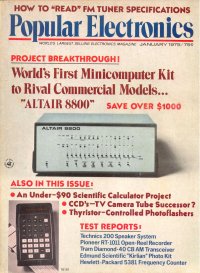
In 1975 the first minicomputer kit reached the market. Two years after Apple started the personal computer revolution withe Apple II. As the personal computer developed, and prices dropped, the PC became to learning what the bicycle had been to individual transportation. With the PC people were able to learn more and more efficiently. They could store huge amounts of information (otherwise forgotten), and practice through simulation
PC reaches the organization

With the explosion of productivity software, the PC found its way into the organization. The tremendous gains in productivity allowed workers to do more of what human are great at - having ideas. As this trend intensified, companies start relying on their employees to develop more and better ideas. The office cube was born so people could "think better". Innovation, not repetition had taken center stage. College degrees and continuous learning became common.
The value of knowledge
As organizations increased their dependency on their workers to have great ideas, so did their dependency on being able to innovate and learn. The organization was no longer a sum of its physical and financial assets. Learning and innovation need to also be considered when determining the competitiveness of an organization. This concept is behind
Balanced scorecard, the first management performance indicator to focus on learning.
Learning goes global

Twenty years have passed since the release of Balanced scorecard. During this time, the way people learn, both in an out of the organization, has changed dramatically. If the PC was to learning the equivalent of a bicycle, the innovation of the past twenty years, can only be compared to Star Trek's tele-transporting. Social networks, GPS based cell phones, googols (10 to the 100th) of high quality information are now available to anyone. Society has entered a period of accelerated development, fueled by
mass-learning. Value is all about ideas. Degrees are good but they returns are short lived given the high pace of change.
Are you listening to the new signals?

I'm sure you noticed the change. Learning is now part of our day life. To live in the perpetual state of change, society has engaged in the
perpetual state of learning. While in the 90s I was still in college, and missed the previous revolution, these time around, I'm right on the middle of everything. Since 2006 I have been tuning into some amazing "signals". Faint as they might be for now, their volume will soon be heard by all. These new signals lead to a new society, more balanced, more educated. A society that uses evidence to make decisions, whether they impact the few or the many - a true
Meritocracy.
The answer to the question
The future global currency is...
knowledge.
Ask yourself.
If in the future, companies will be idea factories then, shouldn't their value depend uniquely on what they know, their learning plans, and how they learn?
For the longest of time, the value of the currency was indexed to gold. Right? The country with most gold, was the richer? Well... in the future economy, gold will mean a lot less (nanotech will be able to create it). What is essential is how fast people can learn.
P.S - Just in case... an important point
Knowledge, not humans, will be commoditized. These new revolution continues the trend of empowering the individual, who know needs to have a sense of the whole. If today only few of us do what they are passionate about (you lucky you!!) , in the future that will be mandatory.






 Posts
Posts

